
Quick answer
Start with Google Search Ads if your goal is enquiries, bookings or sales. Someone searching “aircon servicing Tampines” is already looking for a provider, so your ad can help turn that search into a booking. Consider ChatGPT Ads as an additional channel if you sell products people need advice on before buying, such as choosing an aircon system for their home.
Key takeaways
- Google Search ads respond to what people type into Google. ChatGPT Ads respond to what people discuss in a conversation, along with your ad, landing page and context hints.
- Google Ads covers more than Search, including Display, YouTube video, Shopping, App and Performance Max campaigns. This comparison focuses on Search, a common option for businesses seeking enquiries.
- ChatGPT Ads is still in beta. OpenAI says there are no performance benchmarks yet, so treat it as a measured test and not a replacement for a working Google campaign.
- ChatGPT Ads may appear for Free and Go users, not every ChatGPT user. You also need to check your business category’s eligibility.
- A ChatGPT ad doesn’t buy a mention in ChatGPT’s answer. OpenAI says ads run on separate systems and don’t influence its responses.
Where each ad appears
The ChatGPT placement discussed here appears below a response, labelled as sponsored and kept separate from the answer. Buying it does not buy a recommendation within the answer.
Google Search ads appear above or below results on Google Search. They can also appear on Google Maps, the Shopping tab, Google Images and Google’s search partner sites, carrying an “Ad” or “Ads” label.
The rest of Google Ads reaches people in other places, such as websites, apps and YouTube. Those additional formats sit outside this comparison.
Keywords versus context hints
This is the biggest difference.
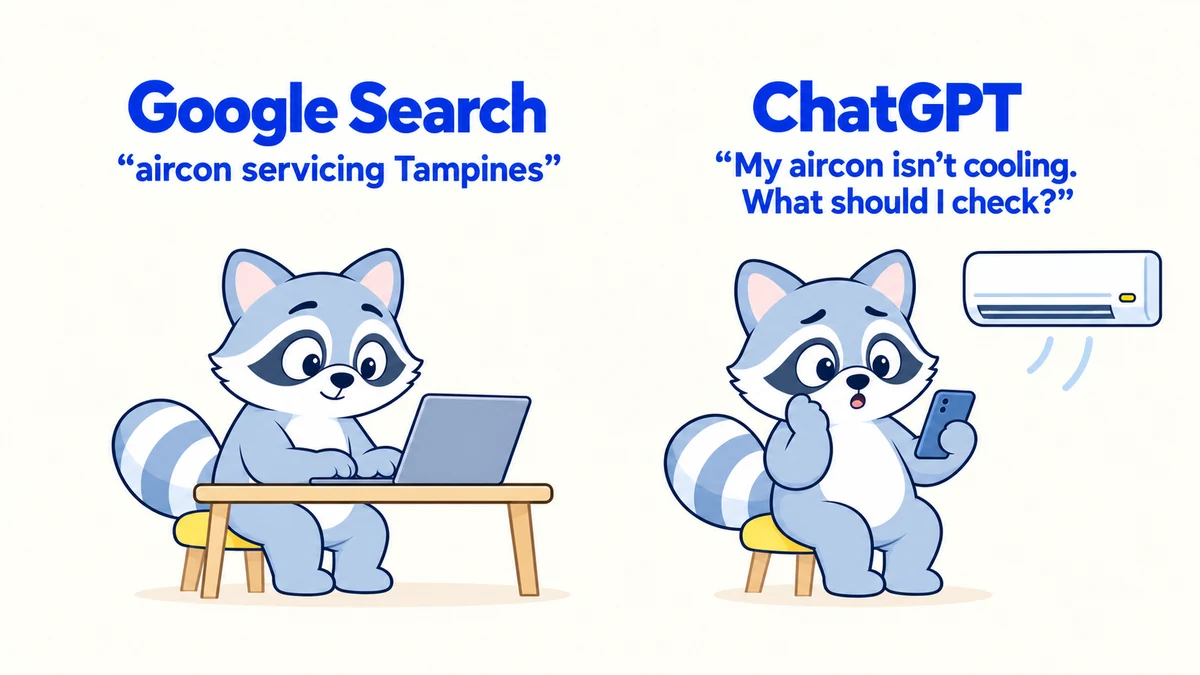
On Google Search, you choose keywords. Match types decide how closely a search must relate to each keyword: broad, phrase or exact. Negative keywords let you stop ads showing on searches you don’t want.
ChatGPT Ads don’t use keywords. You write context hints, which are plain phrases describing what you offer, who it helps or when it’s useful. OpenAI says they inform relevance, but they are not exact match keywords or targeting rules, and they don’t guarantee delivery.
Google’s keyword settings help guide which searches can trigger your ad. ChatGPT uses your context hints alongside other relevance signals, rather than matching a keyword list.
How each auction picks an ad
Both platforms weigh relevance as well as bids, as explained in Google’s auction guide and OpenAI’s ads FAQ.
Google says six factors decide which Search ads appear and in what order. These are your bid, the quality of your ad and landing page, the expected impact of your ad assets, Ad Rank thresholds, the context of the search, and how competitive the auction is.
OpenAI says ChatGPT considers the current conversation, your landing page, title, copy, context hints and targeting. When a user has ad personalisation turned on, it may also use select signals from their wider ChatGPT use. If several ads are eligible, it considers relevance and advertiser bids together.
Both platforms consider your bid, ad relevance and landing page quality.
Who you can reach and what you can advertise
Google Search ads can reach people searching on Google, subject to Google’s own advertising policies.
ChatGPT Ads have narrower limits for now. Ads may appear only for Free and Go users. Plus, Pro, Business, Enterprise and Edu accounts don’t see ads, and OpenAI doesn’t show ads to accounts it identifies as under 18.
OpenAI’s ad policies currently focus on consumer categories, such as lifestyle and household goods, local services, travel and experiences, and digital products or education. For Singapore businesses, the restrictions matter: financial and health services outside the US are generally prohibited, and legal services outside the US are prohibited. Check the current OpenAI ad policies before planning a campaign.
Which one should your business use?
Start with Google Search if people already search for your service by name, such as “aircon servicing Tampines”, and you need leads you can measure against an established setup.
Add a ChatGPT Ads test if your business is in an eligible category and customers often research, compare or plan before buying. OpenAI’s current categories include travel and experiences, household goods, education and local services.
Run both if you can fund a separate test without starving a campaign that already works. Keep the budgets apart so you can see what each channel actually delivers.
If you’re weighing this up for the first time, our overview of ChatGPT ads in Singapore explains how the placements look and how setup works. And if the real question is writing ad copy with AI for Google or Meta, that’s a different service. We explain the difference in ChatGPT Ads vs ads made with ChatGPT.
For Google Ads or Meta Ads management, our parent agency SEOExpert offers PPC and paid ads.
Plan a ChatGPT Ads test alongside Google
We set up ChatGPT Ads campaigns for Singapore businesses, including ad groups by customer intent, context hints, ad variations, tracking and landing page checks. Tell us what you’re running on Google today and we’ll help you plan a test that sits alongside it.

Berenice Soh
Berenice founded SEOExpert after running campaigns across three Singapore agencies. Her experience spans SEO, generative engine optimisation (GEO), paid advertising and landing page design. At AIAdvertising.sg, she helps businesses connect campaign strategy, ad creative and landing pages as they explore ChatGPT advertising.